On False Memories – Keaton Studebaker
Originally published in Repressed Memory Roadtrip (NDA Books, 2025).
“Where you come from is gone, where you thought you were going to never was there, and where you are is no good unless you can get away from it.”
– Flannery O’ Connor, Wise Blood
“To be alive, to him, is to be made of memory—to him if a man’s not made of memory, he’s made of nothing.”
– Philip Roth, Patrimony: A True Story
Last summer I went for a walk at night with a friend down a street we’d both been living on for about 2 years. We’d been walking and driving down this street multiple times a day during this time. For some reason we started talking about stoplights, and I made a comment about there not being any on this street (by the time our conversation had turned to this topic we were on another street). My friend said there absolutely were, but I was so incredibly confident that there weren’t that my friend started to believe me. I was so sure that as we returned I didn’t even bother checking to see if I’d been right and didn’t notice that my friend had stopped walking and was staring at the stoplights I’d laughed at the possibility of existing. It’s a small thing, but I can’t begin to explain how disoriented I felt when I walked back to my friend and saw the stoplights. As I think Rust Cohle put it, “too much has been forgotten in the name of memory.”
I’ve heard there are two kinds of false memories. One is a false positive, which is when you remember something happening or existing that never actually happened or existed. Your brain creates or fills in details that feel real but are entirely false. The other kind of false memory is false negative. With a false negative memory, you fail to remember something that really did happen. Your brain erases or overlooks something so that you believe it never occurred. I’m not sure what misfired with my memory of the stoplights. Did I remember something that wasn’t there (the street without the stoplights), or did I fail to remember the stoplights that were actually there? Or was it a case of just plain old forgetting? Is it possible to just not remember in a way that isn’t false?
This winter my brother learned he’s face blind. He texted me this face quiz that showed several grey, hairless faces that you’re supposed to memorize. Then it presented you with four or five grey, hairless faces and had you try to identify which faces you’d previously been shown. It was a lot harder than I’d anticipated. When I finished the quiz, I felt sure I’d bombed. I ended up getting an average score (I don’t recall what the scoring system was exactly). I sent my results to my brother and asked what he got. I don’t think he got a single one right. We started asking other friends to do the quiz and everyone got more or less the same score I did. I was kind of shocked. I started asking my brother questions about how often he didn’t recognize people and when he started noticing that he wasn’t recognizing people. He told me he’s been pretending to recognize people who come up and talk to him since high school. I wasn’t sure what was more strange—thinking that not recognizing people approaching you in high school is normal or the fact that none of our friends or family realized this about my brother until he was in his late 20s. My brother remembers who people are (he knows, for instance, that he worked with so-and-so at this or the fact that none of our friends or family realized this about my brother until he was in his late 20s. My brother remembers who people are (he knows, for instance, that he worked with so-and-so at this place during this time, etc.), but he doesn’t recognize them when they come up to him. Could this be an issue of him positively remembering faces incorrectly, or is it a matter of faces that ought to be in his memory having been excerpted? What’s the difference between a false memory and a lack of memory?
I’ve never struggled with faces but always struggled with names and dates. A couple weeks ago I ran into one of my students when walking to a bakery with my mom who was in town visiting. I introduced my mom to the student and then gave my mom a completely wrong name for the student, who was, of course, quick to correct me. People who know me have often been irritated by the way I have to write down birthdays and set multiple reminders for other important dates. If I really cared about them, wouldn’t I remember? I always emphasize that my forgetting isn’t personal and claim that I write things down because I do, in fact, care. I tend to think my problems with names and dates have something to do with growing up online. After all, I can’t spell because I grew up with a word processor. In both of these cases it’s probably more a matter of exporting memory. I’ve relied too much on devices to remember for me. Are my memories more reliable if they aren’t distributed across scraps of paper, notebooks, and digital and paper calendars? Do these displacements make me more vulnerable to false memories?
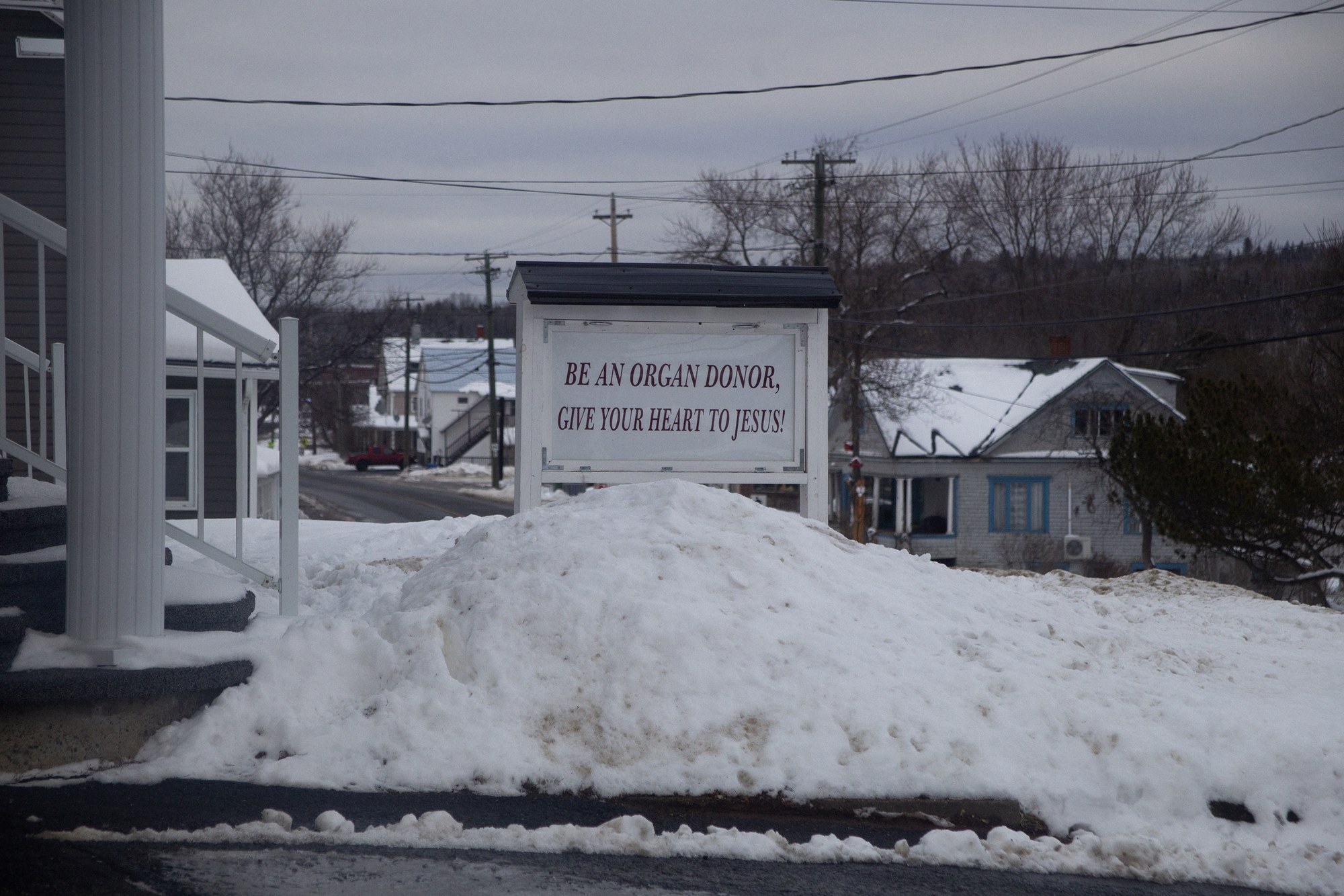
There’s a line in a DeLillo novel, if I remember correctly, that goes something like “this place is like somebody’s memory of a town, and the memory is fading.” That’s what Dimitri’s pictures make me feel. These pictures put me somewhere between something that’s there and shouldn’t be and something that’s not there that should be. I think I said at one point that his pictures are like scenes that I remember but didn’t know I remembered until I saw them. That’s how you know they’re good.
Keaton Studebaker